
Managing service requests can be a complex juggling act for customer-facing teams. In South Africa, where customer expectations increasingly lean towards rapid and personalised responses, many organisations are exploring new ways to optimise service ticket workflows. WhatsApp Business API presents a promising channel for service ticket management, combining the familiarity of WhatsApp with enterprise-grade features.
Why WhatsApp Business API Fits Service Ticket Management in South Africa
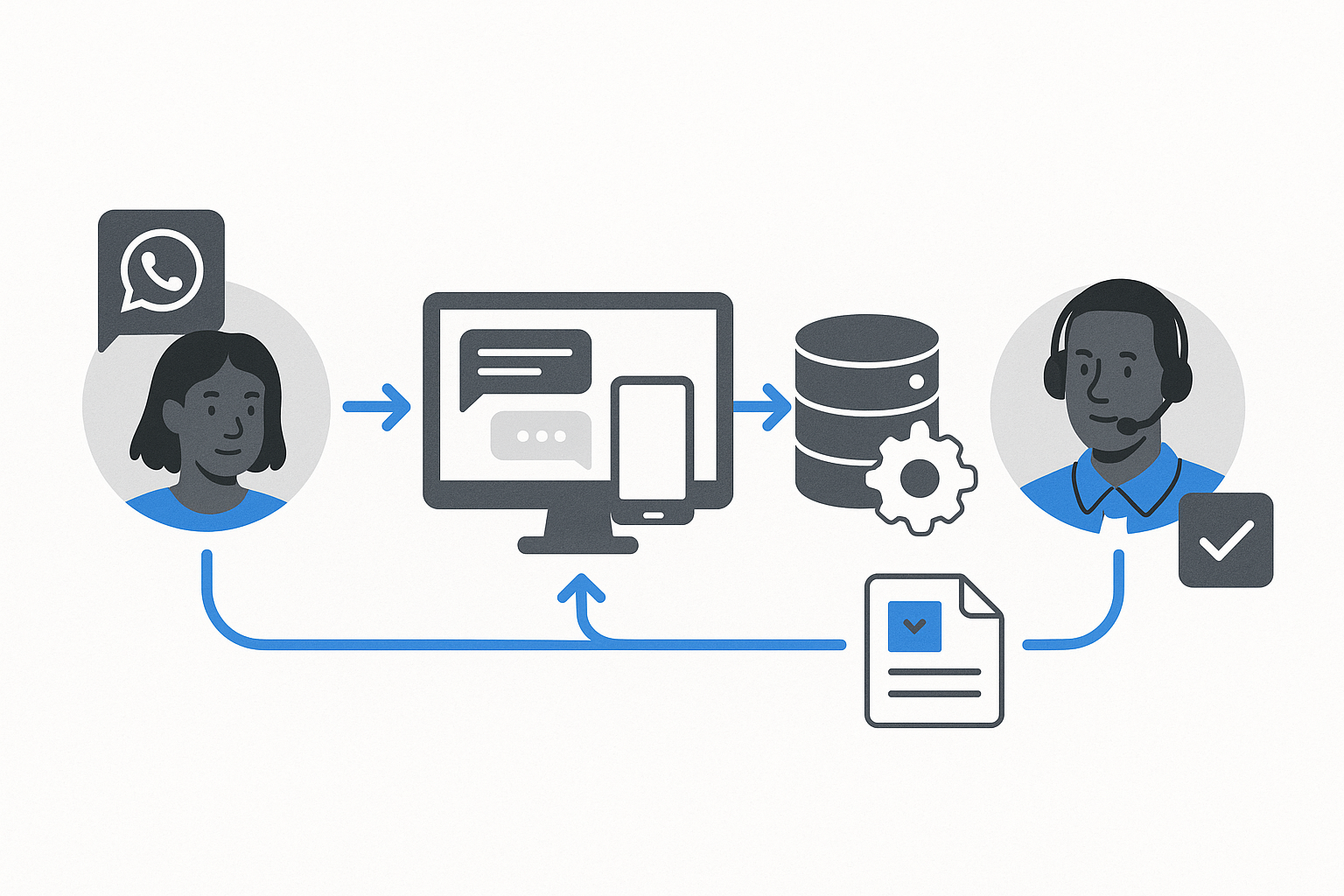
Service tickets traditionally flow through emails, phone calls, or dedicated portals. However, these channels often pose friction for customers and agents alike. South African consumers use WhatsApp daily, making it a natural channel for service requests. The WhatsApp Business API enables organisations to harness this channel while maintaining structured workflows and integration with existing systems.
Unlike the WhatsApp Business App, the API supports multiple agents working from a unified inbox, automation capabilities, and CRM or ERP integration. This is crucial for handling high volumes of service tickets without losing visibility or increasing resolution times.
Balancing Customer Convenience with Operational Control
Customers expect quick, informal communication. WhatsApp offers that familiarity but also demands operational rigour behind the scenes. Managing service tickets requires organised tracking, priority handling, and clear accountability.
Integrating WhatsApp Business API with a ticketing system or CRM means every message can automatically generate or update a ticket. Agents can then work on tickets in a familiar interface without toggling between tools. Automated acknowledgements reassure customers their request is logged, while internal notifications alert the right teams when escalation is needed.
- Message Templates
- Pre-approved message formats to initiate conversations or send updates within WhatsApp, ensuring compliance and consistent communication.
- Unified Inbox
- A single interface where agents manage messages from WhatsApp alongside email, SMS, and other channels.
- Ticket Lifecycle
- The stages a service ticket passes through, from creation to resolution and closure.
- POPIA Compliance
- South Africa’s data protection law requiring consent management, data security, and privacy safeguards.
Key Considerations for Implementing WhatsApp Service Ticket Management
South African organisations must plan carefully to get the best from WhatsApp Business API for service tickets:
- Consent and Privacy: Ensure explicit customer consent before messaging. POPIA requires clear communication about data usage and retention.
- Integration: Connect WhatsApp API to your CRM or helpdesk system to automate ticket creation, status updates, and reporting.
- Workflow Design: Define how incoming WhatsApp messages translate into tickets, including routing rules and prioritisation criteria.
- Agent Training: Equip customer service teams to handle conversations via WhatsApp professionally and efficiently.
- Scalability: Anticipate message volumes and ensure your platform and team can handle peak loads without service degradation.
Comparing WhatsApp Business API with Traditional Channels for Ticket Management
| Aspect | WhatsApp Business API | Phone | |
|---|---|---|---|
| Customer familiarity | High - widely used daily in South Africa | Moderate - less immediate, often lower open rates | High - traditional but often inconvenient |
| Real-time communication | Yes - near instant messaging | No - asynchronous | Yes - live voice interaction |
| Automation and integration | Strong - supports API integrations and workflow automation | Limited - mostly manual processing or email parsing | Low - manual call logging required |
| Multi-agent access | Yes - unified inbox supports multiple users | Depends on system | Depends on call centre setup |
| Audit and reporting | Comprehensive when integrated with CRM | Varies by platform | Often manual and error-prone |
| Compliance with POPIA | Requires explicit consent and message templates | Requires secure email handling | Requires call recording and consent |
Challenges and How to Overcome Them
While WhatsApp Business API offers clear benefits, a few challenges merit attention:
Managing message volumes and agent workload
High message volumes can overwhelm teams if workflows and automation are not well designed. Use chatbot automation for initial triage and FAQs, freeing agents for complex tickets.
Ensuring POPIA compliance
Maintaining consent records and limiting message types to approved templates help avoid legal pitfalls. Work with providers familiar with South African regulation.
Technical integration complexity
Connecting WhatsApp API to CRM or ticketing systems can be complex but pays off in operational gains. Partner with technology providers experienced in integration and local context.
The Role of Automation in WhatsApp Ticket Management
Automation is central to scaling service ticket handling on WhatsApp. Common automation examples include:
- Auto-responders to confirm ticket receipt and expected response times
- Chatbots for collecting preliminary information and answering common questions
- Workflow triggers to assign tickets based on message content or customer profile
- Escalation alerts for urgent or unresolved tickets
Automation reduces manual workload and improves consistency, but must be carefully balanced to avoid frustrating customers who want to talk to a person.
Key takeaway. WhatsApp Business API offers South African organisations a practical way to streamline service ticket management, blending customer convenience with enterprise control and POPIA compliance.
To explore how WhatsApp Business API can integrate with your service ticket workflows, contact Answer to discuss your specific needs and available options.