
Handling payments through customer service channels is a familiar challenge for many South African organisations. Customers want simple, secure, and fast payment options, while businesses need to ensure compliance with local regulations such as POPIA and maintain operational efficiency. Integrating WhatsApp Business API with South African payment systems offers a practical solution that meets these demands.
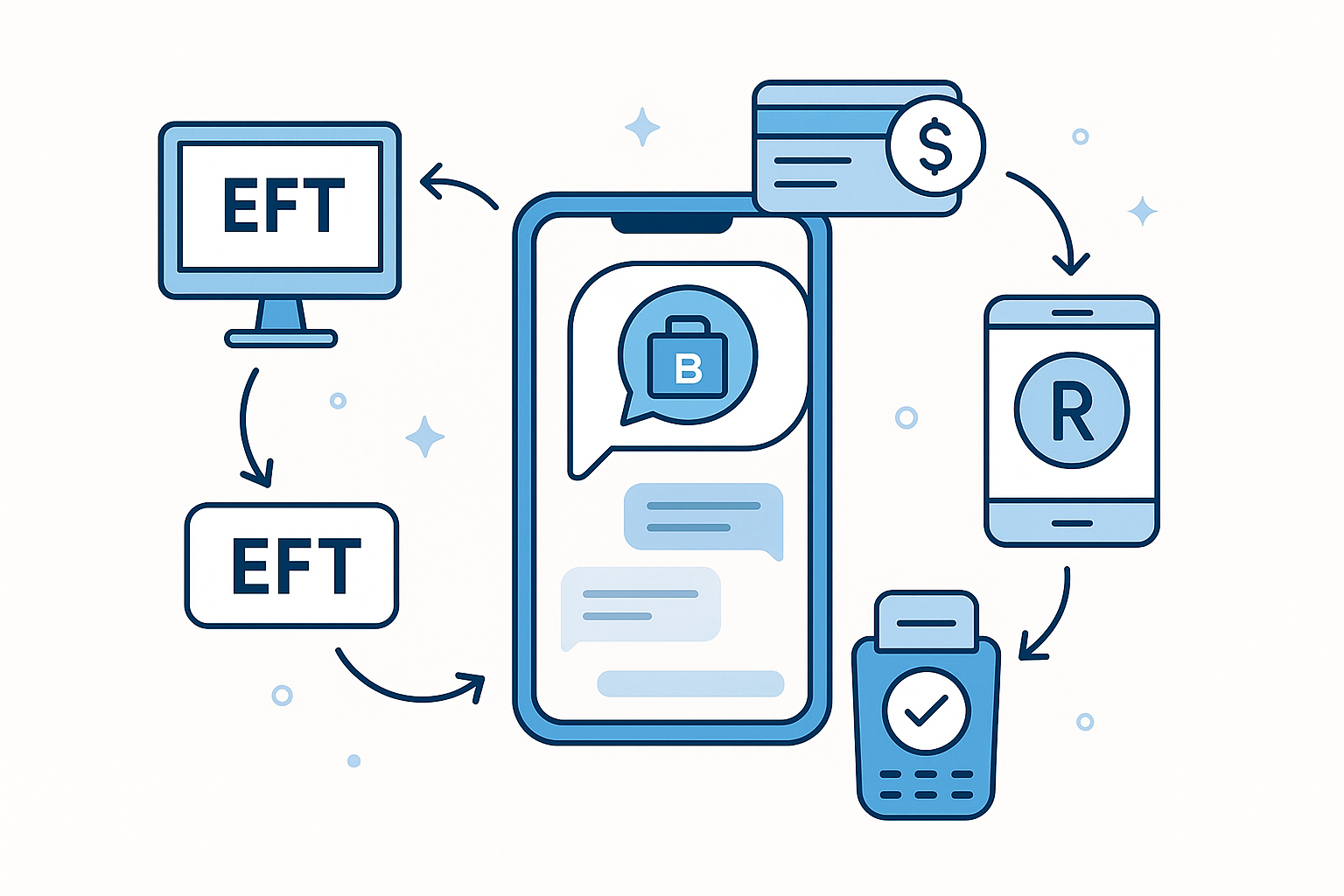
Why Integrate WhatsApp Business API with Payment Systems?
WhatsApp is South Africa’s most widely used messaging platform, with millions of users across all provinces. Customers expect to engage with brands on channels they already use daily. Adding payment capabilities to WhatsApp conversations removes friction from the payment process, directly benefiting both customers and the business.
For example, a Gauteng-based retail company receiving high volumes of order enquiries via WhatsApp can enable customers to confirm and pay for orders without being redirected to external websites or apps. This convenience can reduce abandoned sales and improve cash flow.
Common South African Payment Systems to Consider
South African businesses have several popular payment methods, each with different integration challenges and benefits when connected to WhatsApp Business API:
- Electronic Funds Transfer (EFT): The backbone of business payments, but often manual and slow if not automated.
- Instant EFT platforms such as PayFast and Peach Payments: Provide near real-time confirmation and are popular for online transactions.
- Card payments: Mastercard and Visa dominate, with gateways like PayGate allowing secure card processing.
- Mobile money and wallets: Although less widespread than in other African countries, services like SnapScan and Zapper are gaining traction, especially in urban areas.
Understanding Payment System Integration Challenges
Integrating payment systems with WhatsApp Business API involves several technical and regulatory considerations:
- API availability: Payment providers must offer APIs that support initiating payments and confirming transactions programmatically.
- Security and encryption: Payment data must be handled securely, with end-to-end encryption and compliance with PCI DSS standards where card data is involved.
- Customer consent: POPIA requires clear consent for processing personal and financial data, which must be managed transparently within WhatsApp interactions.
- Transaction confirmation: Automated workflows need to capture payment status updates accurately to update customer records and trigger next steps.
Practical Integration Models for South African Businesses
There are several ways to connect WhatsApp Business API with payment channels, depending on use case and technical capacity.
1. Payment Link Generation within Chat
The simplest approach is to generate secure payment links that customers can click on in WhatsApp. These links direct them to trusted payment gateways like PayFast or SnapScan to complete transactions. Once payment is confirmed, the system updates the chat or CRM automatically.
This model suits businesses that want quick deployment without deep integration but still benefit from the conversational context.
2. Automated Payment Confirmation and Receipt Delivery
For higher volumes or repetitive transactions, automation can close the loop. When a customer pays via an integrated system, a webhook or API callback notifies the WhatsApp platform. This triggers an automated message sending payment confirmation and digital receipts, reducing manual workload and errors.
3. Full Conversational Commerce with Payment Embedded
Advanced setups embed payment prompts and actions directly within WhatsApp chatbots or customer service workflows. Customers can select products, add to cart, and pay without leaving WhatsApp, creating a seamless buying experience.
This requires careful design to balance user experience, security, and compliance but pays off in customer satisfaction and conversion rates.
Key takeaway. By integrating WhatsApp Business API with popular South African payment platforms, organisations can streamline customer payments, improve security and compliance, and reduce operational friction.
Key Considerations for POPIA Compliance and Security
South African organisations must handle payments in ways that respect POPIA’s requirements on personal data protection. This includes:
- Obtaining explicit customer consent before processing financial data via WhatsApp.
- Ensuring secure data storage and transmission, using encryption and secure APIs.
- Providing customers with clear information about how their data is used and their rights.
- Working with payment providers who comply with relevant security standards such as PCI DSS.
Failure to comply risks legal penalties and reputational damage, so integrating payments should include reviewing compliance controls upfront.
Comparison of Integration Approaches for South African Payments
| Integration Model | Complexity | Customer Experience | Compliance Risk | Recommended For |
|---|---|---|---|---|
| Payment Link Generation | Low | Moderate (redirects to external site) | Low if using trusted gateways | Small to medium businesses, quick deployment |
| Automated Confirmation and Receipt | Medium | Improved with timely updates | Moderate; requires secure webhook handling | Businesses with frequent payments, higher volume service centres |
| Full Conversational Commerce | High | Seamless, no channel switching | High; must ensure full data security & consent | Retailers, e-commerce, and organisations aiming for digital transformation |
Integrating payment options directly into WhatsApp conversations can reduce friction that causes customers to abandon transactions.
Looking Ahead: Trends in WhatsApp Payments for South African Organisations
As digital payments evolve in South Africa, expect tighter integration between messaging platforms and financial ecosystems. The Reserve Bank’s work on digital currency frameworks and widespread mobile money adoption could open up new possibilities.
Answer works with South African organisations to design and implement WhatsApp Business API solutions that include payment integrations tailored to your industry and customer base. Whether you want to start with payment links or build full conversational commerce, we can help you navigate technical, regulatory, and operational challenges.
Contact Answer to discuss how your organisation can unlock faster, safer payments through WhatsApp Business API integration.