
Many South African organisations face the challenge of keeping customer interactions both personal and efficient. WhatsApp Business API offers a way to communicate at scale without losing the human touch. But what does enhancing customer experience through this channel really mean in practice? It involves balancing personalisation, speed, compliance, and integration with existing tools.
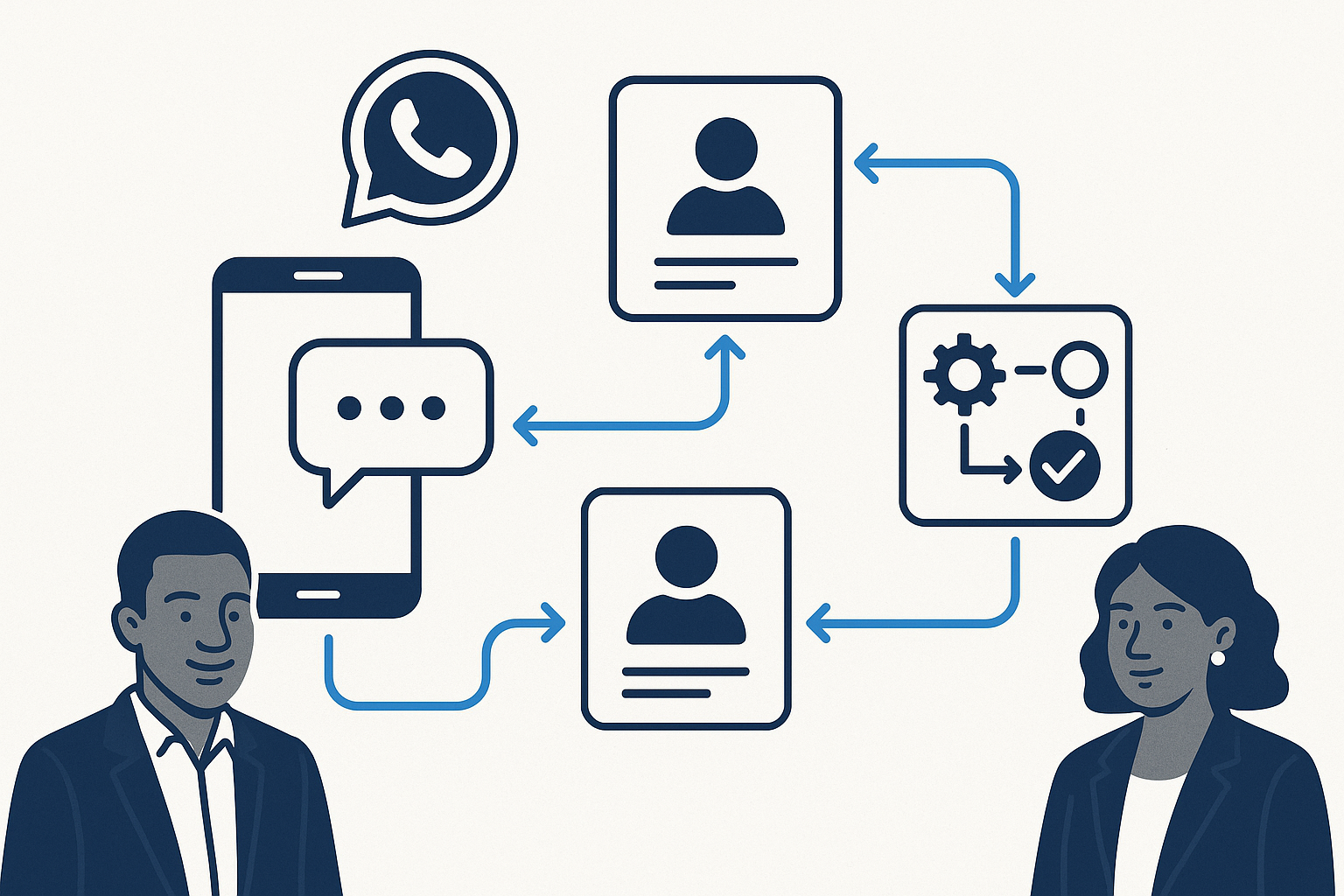
Personalised Messaging at Scale: A South African Reality
South African customers appreciate communication that respects their preferences and context. WhatsApp is widely used locally, making it a natural choice for customer engagement. But sending bulk messages that feel impersonal risks alienating your audience. The Business API enables sending templated messages that can be customised dynamically using customer data from your CRM. For example, a Gauteng-based retail chain might send personalised updates on order status, including delivery dates and local store pickup options.
It is vital to keep in mind POPIA requirements when handling personal data. Consent must be obtained and recorded before sending promotional or transactional messages. This ensures compliance and builds trust.
Combining Automation with Human Touch
Automation can speed up response times and handle routine queries, but customers often still want to speak to a person for complex issues. A WhatsApp Business API implementation typically involves chatbots for first-level support and smart handover to human agents within a unified inbox platform. This approach helps maintain efficiency without sacrificing empathy.
How handover improves customer satisfaction
When a chatbot recognises a question it cannot answer or detects customer frustration, the conversation is escalated seamlessly to a live agent. The agent receives the full chat history plus any CRM notes, so no information is lost. This reduces repeat explanations and speeds resolution.
Integrating WhatsApp Conversations with CRM and ERP Systems
One of the biggest advantages of the WhatsApp Business API is its ability to connect with backend systems. When customer chats are linked to your CRM or ERP, your teams gain a single source of truth. Customer profiles, purchase history, and previous interactions are all accessible while chatting, enabling relevant, informed responses.
Integration also enables automated updates. For example, when an order is shipped, your ERP can trigger a WhatsApp notification using a pre-approved template. This proactive communication reduces inbound enquiries and improves transparency.
| Integration Method | Benefits | Trade-offs | Typical Use Case |
|---|---|---|---|
| Direct API Integration | Full control, custom workflows, real-time chat | Requires significant development effort, maintenance | Organisations with strong IT teams and complex needs |
| Middleware Platforms | Faster deployment, pre-built connectors, user-friendly | Less customisation, subscription costs | Mid-size businesses seeking quick wins |
| Unified Inbox Solutions | Centralises multiple channels, simple agent interface | May limit unique process adaptations | Customer service teams managing WhatsApp alongside email and SMS |
Monitoring and Optimising Your WhatsApp Customer Experience
Measurement is often overlooked but critical. Key performance indicators (KPIs) include response times, resolution rates, customer satisfaction scores, and message throughput. Using dashboards linked to your WhatsApp Business API platform helps identify bottlenecks or drop-offs in the customer journey.
Effective customer experience requires ongoing effort. Constantly review your messaging approaches, templates, and automation rules to adapt to customer feedback and evolving expectations.
Ensuring POPIA Compliance Throughout Customer Interactions
South African organisations must treat customer data with care when using WhatsApp Business API. This means:
- Obtaining explicit consent before sending messages
- Safeguarding stored data and access controls
- Providing opt-out options easily
- Maintaining audit trails for communications
Non-compliance risks hefty fines and reputational damage. Choosing a platform like Answer that understands local legislation can ease this burden.
Balancing Speed and Personalisation in Gauteng’s Competitive Markets
In regions like Johannesburg and Pretoria, customers expect quick responses but also personalised service that respects local languages and nuances. WhatsApp Business API allows teams to build workflows that assign chats based on language skills or geographic location, enhancing relevance and trust.
“Personalised communication combined with efficient handling defines great customer experience in South Africa’s digital era.”
To explore how WhatsApp Business API can transform your customer interactions with compliance and flexibility, contact Answer. Our experts will help you find the right balance to suit your organisation.