
Sales teams in South Africa often face the challenge of reaching customers quickly and personally while managing a growing volume of leads. WhatsApp Business API offers a way to keep conversations seamless, professional, and compliant with POPIA, enhancing customer engagement and closing deals faster.
Understanding How WhatsApp Business API Fits Into Sales Operations
Unlike the WhatsApp Business App, which suits small teams for basic messaging, the Business API lets larger sales teams integrate WhatsApp with CRM systems, automate parts of the sales funnel, and maintain conversation histories centrally. This is key for South African organisations handling complex customer journeys or regulated sectors like finance and insurance.
Choosing the API means planning for development resources to connect systems and manage opt-in consent according to POPIA. It’s not a plug-and-play solution but a platform that requires thoughtful workflow design.
Common Sales Scenarios Improved by WhatsApp Business API
Sales teams often juggle multiple communication channels, risking lost messages or duplicate contacts. WhatsApp Business API helps streamline these challenges with tailored workflows.
Example: Managing a high volume of inbound sales inquiries
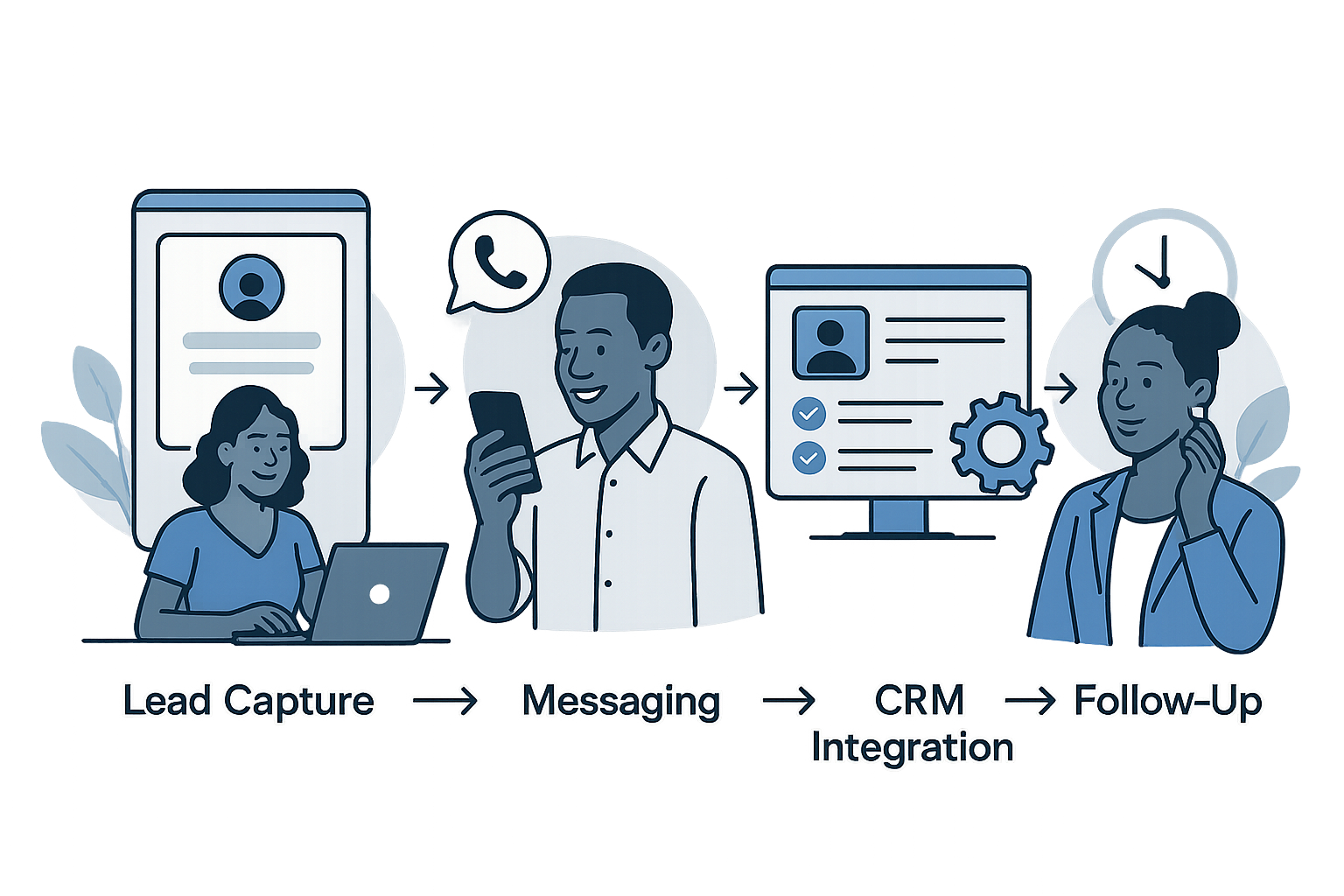
A retail team might receive hundreds of WhatsApp enquiries daily about product availability. Using the API, automated replies can confirm receipt and assign enquiries to agents via a unified inbox. Leads are automatically logged in the CRM, allowing sales reps to prioritise urgent messages and track follow-ups without manual data entry.
Example: Nurturing leads with automated outreach
For longer sales cycles, the API enables scheduled messages reminding prospects about demos, offers, or pending documents. This keeps engagement consistent without relying on sales reps to manually remember every touchpoint.
Balancing Automation and Personal Touch
Automation can speed up responses, but South African customers expect personalised service, especially when dealing with high-value sales or sensitive information. Over-automation risks alienating prospects if conversations feel robotic.
Smart use of WhatsApp Business API mixes scripted replies for common queries with seamless handover to live agents. For instance, initial qualification questions can be automated, then the lead is flagged for a sales rep to take over with a personal message.
Key takeaway. Use automation to handle routine enquiries and lead capture, but ensure smooth escalation to human agents for relationship building and closing deals.
Integrating WhatsApp Conversations With CRM Systems
One of the biggest benefits of the WhatsApp Business API is its ability to connect with CRM platforms used by South African sales teams, such as Salesforce, Microsoft Dynamics, or local solutions. This integration means:
- Automatic logging of every message and interaction in the customer record
- Centralised data that sales managers can use to monitor pipeline health and team activity
- Triggering workflows based on message content, like creating support tickets or scheduling calls
This reduces the risk of lost leads or duplicated effort and supports compliance with data protection laws by keeping communication records intact.
Comparing WhatsApp Business API Sales Use Cases
| Use Case | WhatsApp Business API Benefits | Limitations | When to Consider |
|---|---|---|---|
| Lead Capture and Qualification | Instant engagement, automated responses, CRM logging | Needs opt-in, limited to WhatsApp users | High-volume inbound leads, need for quick sorting |
| Scheduled Follow-ups | Automated reminders and nurture sequences | Must avoid spamming; requires good content strategy | Long sales cycles, nurturing cold leads |
| Personalised Sales Conversations | Rich messaging with multimedia, quick replies | Requires skilled agents; balancing automation | High-value, consultative sales |
| Post-Sale Support and Upselling | Continued engagement, easy cross-selling | Compliance with marketing consent needed | Customer retention focus |
Ensuring POPIA Compliance in WhatsApp Sales Messaging
South African laws require explicit consent before sending marketing or sales messages. WhatsApp Business API platforms include features to manage opt-ins and keep audit trails. Sales teams should work closely with compliance officers to ensure all messaging respects customer preferences.
Planning Your WhatsApp Business API Sales Implementation
Success depends on aligning your sales workflows with the capabilities of the API and your CRM. Consider these factors:
- Team readiness for adopting new tools and workflows
- Integration complexity and IT resource availability
- Quality of customer data and consent management
- Clear objectives for automation versus human interaction balance
Answer’s experience working with South African organisations can help you design the right WhatsApp sales platform suited to your needs.
Next steps. Contact Answer to discuss how WhatsApp Business API can be tailored to your sales process and ensure a compliant, efficient customer experience.