
South African organisations increasingly rely on digital channels to connect with customers. WhatsApp Business has become a frontline tool for communication, given its ubiquity and immediacy. Yet, many teams still manage these conversations separately from their core business systems. Integrating WhatsApp Business with your CRM or ERP platform changes this dynamic fundamentally.
This integration is not simply a technology upgrade. It transforms how customer data flows, how service queries are resolved, and how sales opportunities are tracked. For operations leaders and IT decision-makers, understanding the practical shifts this brings is essential to making the right investments.
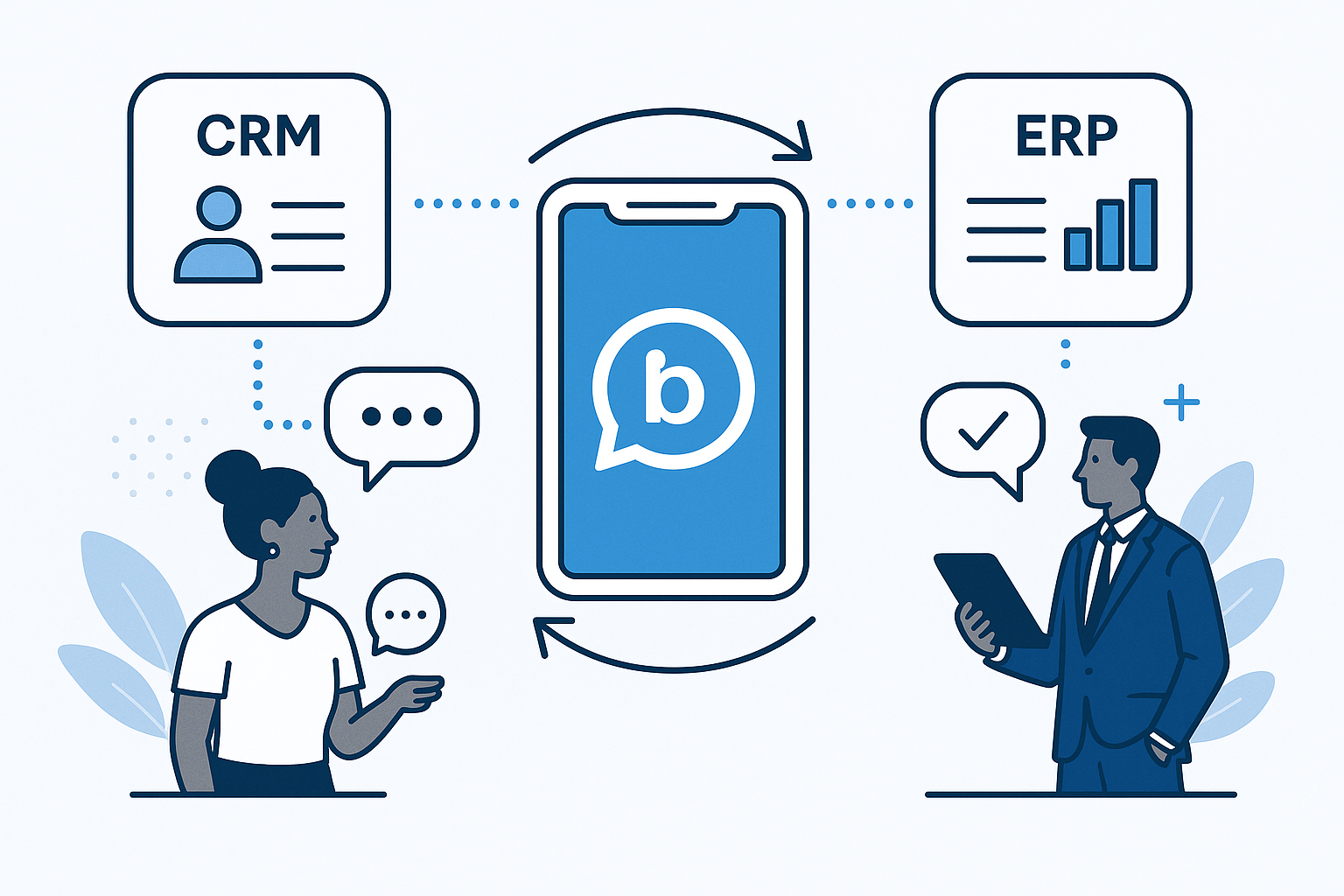
A Real-World Scenario: From Disconnected Chats to Unified Customer Histories
Imagine a retail chain in Johannesburg receiving hundreds of WhatsApp inquiries daily about product availability, order status, and returns. Without integration, each conversation lives in WhatsApp alone, disconnected from the inventory data or customer purchase history sitting in the ERP and CRM. Customer service staff must manually check multiple systems, slowing responses and increasing errors.
Integrating WhatsApp Business with the ERP and CRM means that when a customer messages, their profile pops up immediately with purchase records and current orders. Agents can confirm stock or update delivery schedules without switching apps. Sales teams get notified of warm leads directly in their CRM, enabling quick follow-up. The entire customer journey becomes visible and manageable in a single interface.
Why Integration Matters More in South Africa’s Business Environment
South African organisations face unique operational realities. Diverse customer bases spread across urban and rural areas, varying internet connectivity, and strict data privacy regulations like POPIA shape how communication and data management must be handled.
WhatsApp is widely adopted across demographics, making it a natural channel for customer engagement. But POPIA-compliant handling of personal data is non-negotiable. Integrating WhatsApp Business with CRM and ERP systems enables controlled data storage and processing, aligns consent management, and simplifies reporting for compliance audits.
Moreover, local industries such as retail, financial services, and healthcare benefit from integration through faster service, reduced manual workload, and improved tracking of interactions for quality assurance.
The Challenges Without Integration
- Fragmented Data: Customer details and conversation history are siloed, impeding personalised service.
- Inefficient Workflows: Agents juggle multiple platforms, leading to slower response times.
- Compliance Risks: Manual data handling may fall short of POPIA requirements.
- Missed Sales Opportunities: Leads from WhatsApp chats are not captured or followed up systematically.
Examining the Benefits: What Integration Unlocks
Integrating WhatsApp Business with your CRM and ERP systems delivers advantages that go beyond convenience. It drives measurable impacts across multiple dimensions.
| Capability | Before Integration | After Integration |
|---|---|---|
| Customer Data Access | Scattered across apps; manual lookup required | Instant visibility within unified interface |
| Query Resolution Speed | Slow due to app switching and data gaps | Faster with automated data retrieval and workflows |
| Sales Lead Capture | Informal, often lost or delayed follow-up | Automated capture and task assignment in CRM |
| Compliance Management | Dependent on manual controls and audit trails | Automated consent tracking and data storage aligned to POPIA |
| Team Collaboration | Fragmented with duplicated efforts | Streamlined with unified inbox and shared notes |
Practical Considerations for South African Organisations
Deploying WhatsApp Business integration requires balancing ambition with operational realities. Here are key points teams often weigh.
Integration Costs and Complexity
Linking WhatsApp Business API with CRM and ERP systems involves technical work. Organisations must consider whether their current software supports APIs, the need for middleware, and ongoing maintenance. Partnering with local experts like Answer helps navigate these challenges efficiently.
Managing Consent and Data Privacy Under POPIA
South African businesses must ensure customer consent is obtained and recorded for messaging on WhatsApp. Integration can automate consent capture and store records securely, reducing risk and easing audits.
Training and Adoption by Customer-Facing Teams
New workflows and tools require staff training. Integration pays off only when teams fully adopt the unified platform. Early engagement and iterative feedback loops help smooth this transition.
Choosing the Right Integration Approach
There is no one-size-fits-all solution. The best approach depends on your organisation’s size, existing software, and strategic priorities.
Some companies prefer full ERP-CRM-WhatsApp integration for end-to-end visibility. Others start with CRM and WhatsApp, adding ERP links later. The choice also depends on the quality and flexibility of your current ERP and CRM vendors’ APIs.
Integrating WhatsApp Business with your CRM or ERP is not just a tech upgrade-it realigns your entire customer experience and operational efficiency.
How Answer Supports WhatsApp Business Integration in South Africa
Answer specialises in building WhatsApp Business API platforms tailored to South African organisations. We help integrate WhatsApp with leading CRM and ERP systems, ensuring data security and POPIA compliance throughout.
Our approach includes consulting on workflow design, implementing unified inboxes, automating lead capture, and providing reporting dashboards for real-time insights. We understand the local market challenges and offer scalable solutions that grow with your business.
Key takeaway. Integrating WhatsApp Business with CRM and ERP systems is essential for South African organisations aiming to improve customer service, comply with POPIA, and drive sales growth through efficient workflows.
If you’re exploring how to connect WhatsApp Business with your existing systems or want to evaluate your options, contact Answer to discuss your requirements and see how integration can change everything for your team.