
When South African organisations adopt WhatsApp Business API to connect with customers, data privacy is often top of mind. How do you ensure that your communication platform respects the Protection of Personal Information Act (POPIA)? What practical steps can your customer-facing teams take to protect sensitive data without slowing down service?
WhatsApp is everywhere in South Africa, with millions relying on it daily. For business use, the API unlocks powerful integration and automation capabilities but comes with responsibilities. This article explores the realities of managing data privacy within WhatsApp Business API environments and how you can build trust while staying compliant.
POPIA’s Influence on Messaging Platforms
POPIA governs how personal information must be collected, processed, stored, and shared in South Africa. For organisations using WhatsApp Business API, this means you must have clear consent from customers and ensure data security throughout their interaction journey.
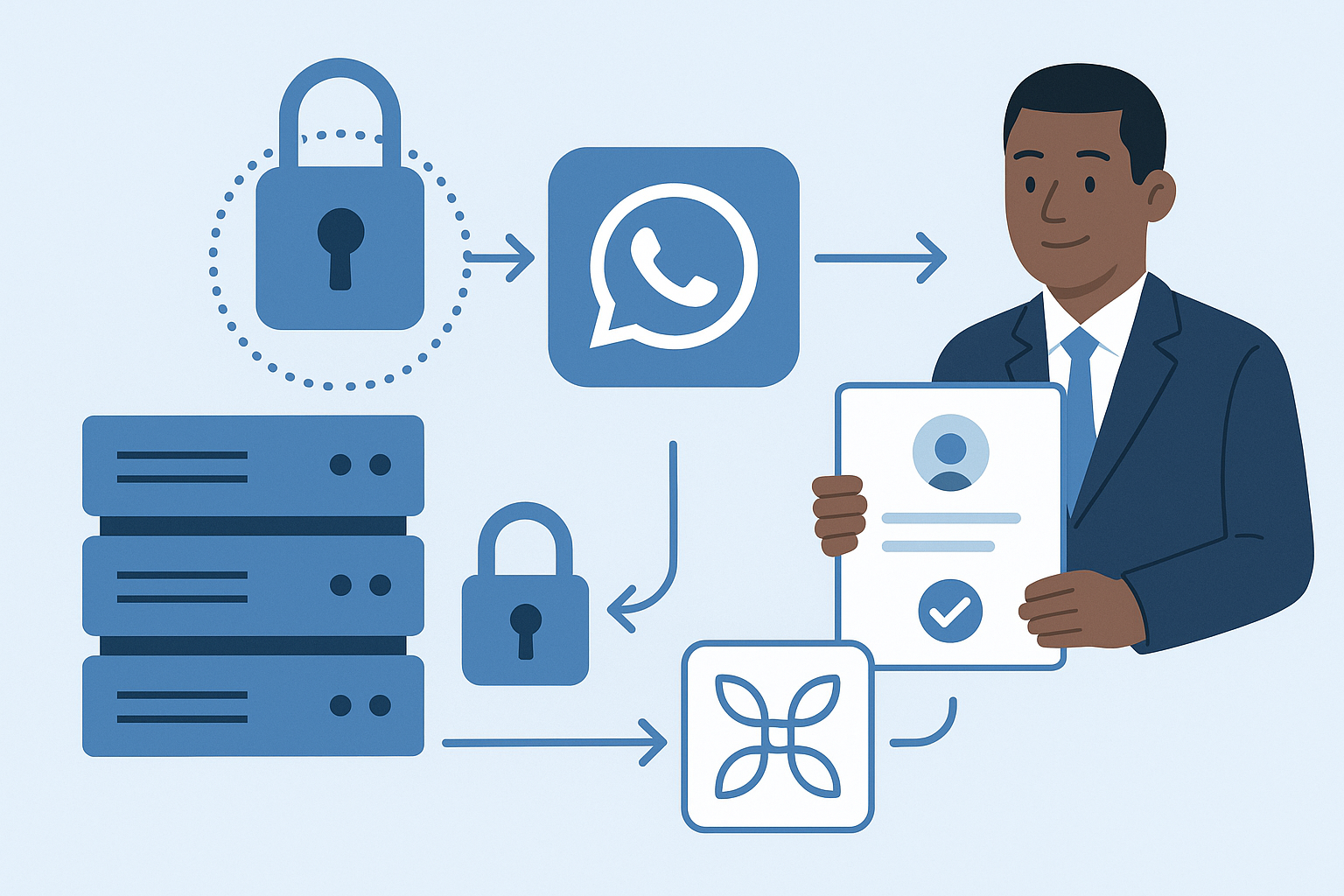
Unlike the consumer WhatsApp app, the Business API involves backend servers, databases, and often CRM or ERP integration. This introduces points where personal data is stored and processed outside the WhatsApp environment, increasing the complexity of compliance.
Consent: More Than Just a Checkbox
Obtaining consent is fundamental. It must be informed, voluntary, and specific. For example, you cannot send marketing messages on WhatsApp without explicit consent, nor can you share customer data with third parties without permission.
Many South African companies use double opt-in methods, confirming consent via SMS or email before initiating WhatsApp communications. Your workflows should record and timestamp consents to demonstrate compliance if audited.
Additional consent management considerations
Besides initial consent, customers should be able to withdraw permission easily. Your WhatsApp API system should support opt-out commands or links, and your teams must respect these promptly.
It’s also important to segment communications properly. Customers consenting to transactional notifications should not receive promotional messages unless consent is renewed.
Securing Customer Data in WhatsApp Business API Workflows
Data security in WhatsApp Business API involves both WhatsApp’s own encryption and your organisation’s handling of data once messages reach your systems.
WhatsApp messages are end-to-end encrypted from sender to recipient within the app. However, once the message arrives at your company’s backend-often a cloud server or CRM-the data can become vulnerable if not properly protected.
Where Risks Arise
- Data storage: Storing chat logs, attachments, or contact details without encryption or access controls risks leaks or breaches.
- Third-party integrations: Many companies connect WhatsApp API with CRM, ERP, or analytics. Each integration point must be evaluated for security and compliance.
- User access: Customer service agents, sales reps, and IT staff require role-based access to data to prevent unauthorized viewing.
- Data retention: Keeping customer data longer than necessary increases risk and may violate POPIA’s purpose limitation principle.
Technical Controls to Implement
| Control | Purpose | Implementation Considerations |
|---|---|---|
| Encryption at rest | Protect stored data from unauthorized access | Use database encryption and encrypted backups; limit decryption keys to essential personnel |
| Role-based access control (RBAC) | Restrict user permissions according to job roles | Define roles clearly; implement audit logs to track access and changes |
| Secure APIs and integrations | Ensure data shared with other systems is protected | Use OAuth or token-based authentication; audit third-party vendors regularly |
| Data minimisation | Retain only necessary personal data | Automate deletion or anonymisation of old data; review data collection forms |
Balancing Automation and Privacy in Customer Interactions
Automation via WhatsApp Business API, such as chatbots or workflow triggers, improves efficiency but can complicate privacy compliance if not carefully managed.
For instance, chatbots that collect personal information should do so transparently, explaining why data is needed and how it will be used. Sensitive data requests might best be handled by live agents after verifying consent.
Privacy compliance is not a barrier to automation; it shapes how automation is designed and deployed.
South African companies may also want to segment automated communications by consent type. For example, a chatbot can handle FAQs and transactional updates freely, but marketing offers should only be sent to customers who opted in specifically to promotional messages.
Training and Culture
Beyond technology, building a privacy-aware culture within your teams is critical. Agents should understand POPIA basics and how to handle requests related to data access, correction, or deletion.
Regular training and clear policies help prevent accidental breaches and ensure your organisation treats customer data respectfully and accurately.
Practical Next Steps for South African Organisations
- Review your WhatsApp Business API setup: Map where and how customer data flows and is stored.
- Audit consent processes: Ensure consents are explicit, recorded, and managed for withdrawal.
- Implement technical controls: Encryption, RBAC, secure integrations, and data minimisation.
- Train your teams: Make privacy awareness part of daily operations.
- Monitor and update: Regularly review compliance as your messaging channels evolve.
Answer specialises in designing WhatsApp Business API platforms that support strong data privacy and compliance with POPIA. Our approach helps you embed privacy by design and build customer trust while benefiting from automation and integration.
Contact Answer to discuss how we can help your organisation balance effective customer communication with data privacy requirements.