
Customer service teams in South Africa face growing pressure to respond quickly, accurately, and compliantly. As enquiries flood in from WhatsApp, email, SMS, and social media, juggling multiple platforms can slow response times and frustrate customers. Workflow automation offers a way to streamline these interactions, reducing manual effort while maintaining a personal touch.
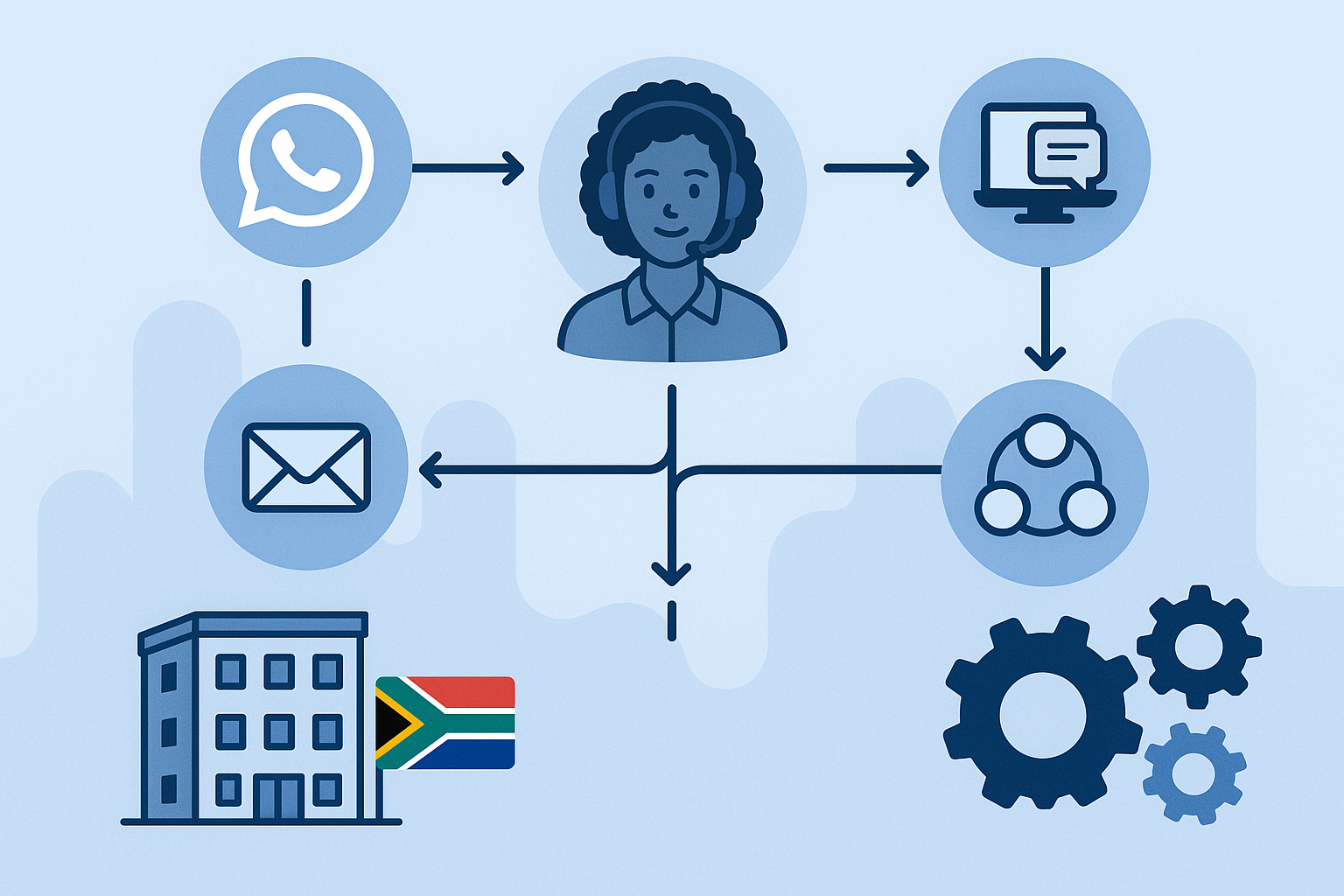
Why Automation Matters for South African Customer Service
South African businesses often operate in competitive markets where customer patience is limited, and brand reputation can hinge on timely, consistent communication. Manual handling of messages across apps risks errors and delays, while routine tasks consume valuable agent time. Automation can offload repetitive work, flag urgent issues faster, and ensure every enquiry is routed appropriately.
Importantly, any automation system must respect South Africa's Protection of Personal Information Act (POPIA). Automated processes should incorporate consent management, data minimisation, and secure logging to maintain compliance.
Common Customer Service Workflows Ripe for Automation
Before implementing automation, identify which workflows will free your team to focus on meaningful customer engagement. Typical candidates include:
- Automatic assignment of incoming messages based on topic or customer segment
- Pre-screening enquiries with chatbots to collect necessary details upfront
- Escalation triggers for unresolved queries after defined SLA times
- Follow-up reminders for pending tasks or promises made to customers
- Integration with CRM for real-time updates and activity logging
For example, a retail business might automate order status requests via WhatsApp chatbots, only handing off complex complaints to a human agent. A financial services team may use automated filters to prioritise urgent loan application queries, ensuring compliance with documentation requirements.
Balancing Automation and Human Touch in Customer Conversations
South African customers expect personalised service even when automation handles first contact. Over-automation risks alienating users if responses feel robotic or if the system fails to understand nuanced requests.
Effective workflow automation does not replace agents; it enables them to focus on conversations that require empathy and judgement.
One practical approach is layered automation. Initial screening and data collection are automated, but agents take over with full context when needed. This preserves the natural flow of conversation while improving efficiency.
Integrating WhatsApp Business API and Unified Inboxes for Seamless Automation
WhatsApp is a dominant communication channel in South Africa, making the WhatsApp Business API essential for scalable automation. Unlike the WhatsApp Business app, the API supports integration with CRM systems and workflow engines, enabling complex routing and chatbot integration.
Pairing this with a unified inbox consolidates messages from WhatsApp, email, and SMS into a single interface. Automation rules can act consistently across channels to reduce duplication and speed response.
| Feature | WhatsApp Business App | WhatsApp Business API with Unified Inbox |
|---|---|---|
| Multi-channel Message Management | Limited to WhatsApp only | Consolidates WhatsApp, email, SMS, and more |
| Workflow Automation | Basic quick replies | Complex rules, chatbot integration, escalations |
| CRM Integration | None or manual export | Full real-time sync for lead and case management |
| POPIA Compliance Support | Minimal, manual responsibility | Built-in consent management and audit trails |
Practical Considerations When Implementing Workflow Automation
South African operations leaders should weigh several factors before automating customer service workflows:
Implementation effort and integration complexity
Automation requires clear process mapping, staff training, and possibly IT involvement to connect APIs and CRM systems. Choosing a platform that supports local infrastructure and languages reduces risk.
Data privacy and POPIA compliance
Automation tools must securely handle personal data, with explicit customer consent and options to opt out of automated messaging. Logs should be retained for audit purposes.
Change management and staff buy-in
Teams must see automation as an aid, not a threat. Early involvement and clear communication about how tools free them for higher-value tasks helps smooth adoption.
The Business Impact of Workflow Automation in South African Customer Service
When carefully implemented, automation improves first response times, reduces manual errors, and increases team capacity without additional headcount. Customers benefit from faster, more consistent answers, which builds trust and loyalty.
For many South African businesses, workflow automation is no longer a luxury but a necessity to remain competitive and compliant in an increasingly digital customer environment.
Key takeaway. Workflow automation tailored to local business needs and POPIA requirements enables South African customer service teams to work smarter, not harder-enhancing responsiveness and customer satisfaction.
If your organisation is looking to explore how workflow automation can improve your customer service operations, contact Answer to discuss your specific requirements and discover practical solutions that fit your context.